student demonstrations dc1960

The mobs I talked about in “When Mobs Roam the Halls of Ivy” are real, and they–among other scary things–are a threat to academic freedom. Whether it is political pressure on boards or self-appointed bands of vigilantes policing the boundaries of politically correct speech, the forces that  stifle open and unfettered inquiry on  college campuses undermine everyone. It is not the exclusive province of one political stripe to protect the rest of us from the assault of the other side whose ideas are–axiomatically–unacceptable.  The campus civil rights movements of the 1960’s would probably not have withstood the determined attacks that would be mounted today.

The real point of the Henry Drummond (the Clarence Darrow  character in the 1955 Jerome Lawrence and Robert Edwin Lee play Inherit the Winddefense of  academic freedom (“the right to be wrong“) is revealed when with Matthew Brady (William Jennings Bryan) takes the witness stand and Drummond goes on the attack: “I’m trying to stop you bigots and ignoramuses from controlling the education of the United States.” Lawrence and Lee wrote ITW at the height of Senator Joe McCarthy’s crazed hunt for Communists, a purge that viciously pursued academics and intellectuals whose ideas and writings placed them outside the Senator’s narrowly defined strip of acceptable thought.  It was a parable for its time, but the 1925 trial of Tennessee teacher John Scopes for violating the Butler Act was one of literature’s most inspired dramatic backdrops.

Henry Drummond was on the side of progressives for whom bigotry meant barring the teaching of evolution, but he would have been just as comfortable defending campus  civil rights protests or anti-war demonstrations in the 1960’s. Or Columbia President Lee Bollinger’s decision to host Iranian President Ahmadinejad. Bollinger introduced Ahmadinejad with a blistering attack on the very fabric of regressive Iranian theocracy.  Bolliinger, it could be argued, was not a very gracious host, but he at least enabled the kind of politically unpalatable speech that academic freedom is designed to protect. But what about the other side? Would Drummond have been equally passionate about the pressure brought by progressive Rutgers faculty members to rescind the invitation to Condoleeza Rice’s  to deliver the 2014 commencement address, “because of her role in the Iraq War.” If not, it would have been a missed opportunity to point out that academic freedom is  a two way street, and the door that leads to it is either open or closed. There is nothing in between.

Read More

https://i0.wp.com/www.reviewsbyjessewave.com/wpstorage/wp-content/uploads/2011/11/Borders_Now_Closed.jpg

We have talked many times about the demise of colleges, comparing higher education to other industries that believed they could resist the advance of technology.  Borders book stores, Blockbuster Video, and a whole raft of local newspapers are just the easiest examples of revered enterprises that simply went out of business. From this discussion comes an interesting essay by C21U visiting scholar Michael Haggans, who argues that campuses close all the time. Sometimes it is temporary:

Whether by snow and ice, wind, fire, flood, civil disorder or bankruptcy, you may be certain that your campus will be closed. It is just a matter of when and how long the closure will last. Even a brief closing provides a glimpse of higher education without the comfortable assumption of shared space and time – the familiar functionality of a campus.

Sometimes, institutions–like the dozens of colleges and universities near Japan’s Fukushima nuclear reactor–not only survive catastrophe against all odds but are the only place where communities can gather and rebuild. Sometimes they close forever:

‘Forever’ is an unstated part of every institution’s mission statement. Over the last century, hundreds have winked in and out of existence. [Westminster’s Ray Brown maintains the most comprehensive list.] A few such as Antioch College have been well known, their demise widely reported. Most are long forgotten. They close and disappear through merger, acquisition by for-profit consortiums, and from simple bankruptcy.

Read More

cheap data collection


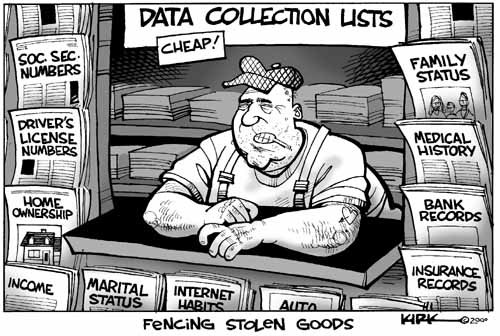
The World Economic Forum Global Agenda Council on the future of universities was absorbed earlier this year into several other councils–a mistake, in my view, since none of the other councils have institutional focus–but several of the white papers live on. This one on the privacy issues inherent in learning analytics generated some interest in 2012, but the big data aspects of higher education seemed like an abstraction to many council members. Over the past year it has started to loom large (see here and here, for example).  I happen to be a big fan of analytics.  Data from the 700,000 students enrolled in Georgia Tech’s Coursera MOOCs have already had an impact on the quality of residential instruction. However, one of my day jobs is cybersecurity, which has made me sensitive to new technologies that have not paid sufficient attention to security and privacy. This white paper is a note of caution.

Read More

Ivory Tower

Is College Worth It? Andrew Rossi Investigates the Alarming Cost of Education in Ivory Tower.

The trailer is available here. It is also worthwhile to check out the TakePart home for the film, where there are some very interesting interactive tools for exploring the impact of rising costs in your state and at your institution.

Digital versions can be purchased at iTunes, Amazon, and many other online media stores.


Ivory Tower (1)
The Ivory Tower, a 2015 Sundance Festival film by Andrew Rossi, is a dramatic and unflinching look at the spiraling cost of higher education. Rossi’s Page One: Inside the New York Times proved that Rossi can disassemble even complex enterprises, so that everyone can see the moving parts. It was a good warm-up for this effort. The similarities are striking.  Jay Hoberman said in his Village Voice Review of Page One: It’s a system at once efficient and cumbersome, ultra-modern yet quaint, that suggests nothing so much as a herd of dinosaurs, oblivious to the threat of impending extinction. And, like Page One, there is a blend of alarmism and genuine fondness for American higher education. Innovation–particularly technological innovation–plays the same role in higher education as it does in other industries that are being disrupted.  It is both the disruptor and the way to avoid disaster. If only leaders can abandon old assumptions.