Archive

Comment and Review

Here the reasoning behind one of my criticisms of higher education: the factory model — a model that is in near-complete collapse — was imposed upon universities at the turn of the 20th Century by well-meaning industrialists who simply wanted to establish some discipline on the chaos that reigned in those days. Their charges jumped on half-developed industrial engineering theories and folded them into public policy, and that is the legacy we cope with today in the form of bloated bureaucracies, an over-reliance on measuring inputs, ineffective testing, and a largely parasitic accreditation industry.

Now we have a new generation of tinkerers who hear that costs are out of control and want to automate the hell out of college teaching instead of focusing on spending the money more wisely. Let me give you a preview of one of my conclusions: it’s not that we cannot afford to teach undergraduates the old way, it’s rather that everything from intercollegiate athletics to debt-laden performing arts centers grabs budget dollars before they get to the classroom. The main financial threat to American colleges and universities is mission creep, not a lack of robot-teachers.

That’s why I was particularly intrigued by Audrey Waters’  critique of Khan Academy that appeared in Explainer. I am a fan of Khan and especially his content — in fact, we are launching a program called TechBursts at Georgia Tech’s Center for 21st Century Universities to experiment with how to deconstruct a mature curriculum along those lines — but like Waters I am somewhat alarmed that there is such a rush to declare Khan Version 1.0 such an unqualified success.

It’s not that I am swayed by the “Yes but conducting a hands-on experiment is so much better than Sal Khan’s explanation of force…” argument. Indeed, deliberately taking the laboratory out of an introductory physics course does not seem like a good idea, but Khan does not advocate that either.  Classroom inversion would in fact allow more time for mentoring in a more interactive laboratory setting.

It’s rather that I have not seen a cogent analysis of these critiques:

  • Technology replacing teachers: OK, it’s not a good idea, but in the all-or-nothing world of transforming higher education there’s no such thing as just a little automation.  The zealots want it all.
  • The Bill Gates connection: The Gates Foundation and Bill’s personal commitment to reform has been a welcome entry to higher education.  It certainly helped breathe life and excitement into a field that had become dominated by bureaucrats and backward-looking analysts. But the criticism that Gates will morph into a new Andrew Carnegie set of heavy-handed approaches is worthy of closer examination
  • Old Wine, New Bottles: I don’t know if Khan Academy is bad pedagogy (Although I suspect that it is not since it seems to me to be pedagogically agnostic) but applying a layer of 21st Century Technology to a 19th Century curriculum does not sound at first blush like a good way to start the transformation process.
  • Learning or Leveling Up: Waters outlines a critique of gameification and somewhat unfairly says that the major criticism is that it puts the emphasis on earning badges rather than learning.  But so does the inflation-ridden practice of  traditional grading. On the other hand, there is a rush to Web 2.0 platforms that is not informed by even a sliver of experience in actual college settings.
  • Part of a Larger Trend: This is the most worrisome critique.  There are severe problems in higher education, but quick fixes that nibble at the edges probably just make things worse.  At best, they divert attention and resources from more severe  problems. At worst, they promote change for its own sake, and that is never a good idea.

It’s unlikely that the first generation knowledge bursts that Salman Khan assembled on a shoestring are the salvation of higher education.  They are Version 1.0 of a technology that has not even been thoroughly wrung out yet. It’s great that Bill Gates is a backer,  but does anyone remember Windows 1.0? It took Microsoft three versions just to get it working.

#change11
They are consistent memes.  We do not have to invest in American colleges and universities because (1) most jobs do not require a college degree, (2) there are too many college students already, or (3) long-term income is not related to level of education.

I hear their echos at neighborhood social gatherings. CCAPs Richard Vedder has been touting off-shoring and the shortage of tradesmen as a reason for not “mindlessly increasing college enrollments” for several years now. They are a consistent talking point in states that feel the need to reduce their expenditures and see the public university system as a fat, juicy target.  If college graduates wind up driving cabs and flipping burgers — cartoonish versions of the truth —  what is the real value of a college diploma?

Before anyone else buys into the idea that we need fewer — not more — college graduates, we should probably go to the videotape. A report entitled The Undereducated American casts grave doubt on some underlying assumptions that sound plausible on the surface but seem to crumble away when they are examined more closely.

Anthony Carnevale and Stephen Rose focused a lens on the production of college graduates compared to the market demand.  They concluded that

  1. The United States has been under-producing college trained workers since at least 1980.
  2. Supply has failed to keep up with demand, resulting in a ten-year shortfall of up to 20 million graduates.
  3. The underproduction of college graduates is a significant cause of income inequality in America.

The most striking thing about their analysis is that it relies on traditional economic theory. Employers would have to be in a national conspiracy to behave irrationally to conclude otherwise.

According to Carnevale and Rose, the demand for college graduates has been growing at 2% annually since 1980 but the higher education system has been falling short of that demand by at least 0.5%.  That’s a current deficit of 20 million college trained workers.

To put that in perspective: it would take an additional 200 universities the size of Georgia Tech just to fill that gap.

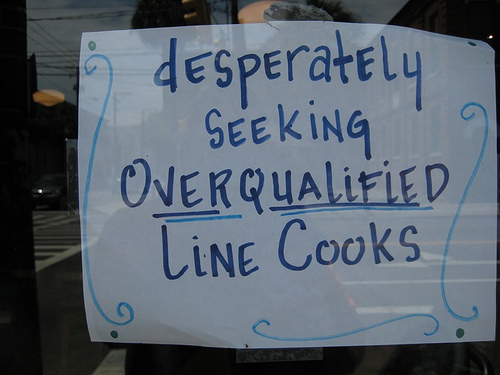
What about the idea that college graduates are being shunted into low-wage jobs that “don’t require a degree?”   In truth college graduates hold only a tiny percentage of the jobs for which a college education is overkill. College-trained workers account for only 7% of the total number of cashiers and hairdressers for example.  It is simply not true that the nation’s colleges and universities are producing overqualified line cooks.

Remarkably, even in those cases where a low skill job is held by a college graduate, a bachelor’s degree results in a “wage premium” for workers. On the average, college-educated hairdressers earn nearly 70% more than their high-school graduate workmates.  Retail sales clerks fare even better:  the 18% of  the retail sales personnel who have college degrees earn 73.2% more than someone who has only a high school diploma.  It is a wage premium that grows to 75% for some middle skill jobs.

Carnevale and Rose also analyze income discrepancies across the entire economy, concluding that the lack of college-trained personnel to fill available positions is a cause of income inequality.  It is a problem that is compounded by the increasing selectivity of some colleges and universities.  They with increasing frequency select their freshman candidates from a narrow socioeconomic pool.  So, not only do they earn more, but they come from families with disproportionately large incomes and personal fortunes.

Arizona State president Michael Crow once laid a large chart in front of me and pointed out that “The United States has not increased capacity in higher education since 1960.”  He was right.  We need 200 more universities just to get back in the game.


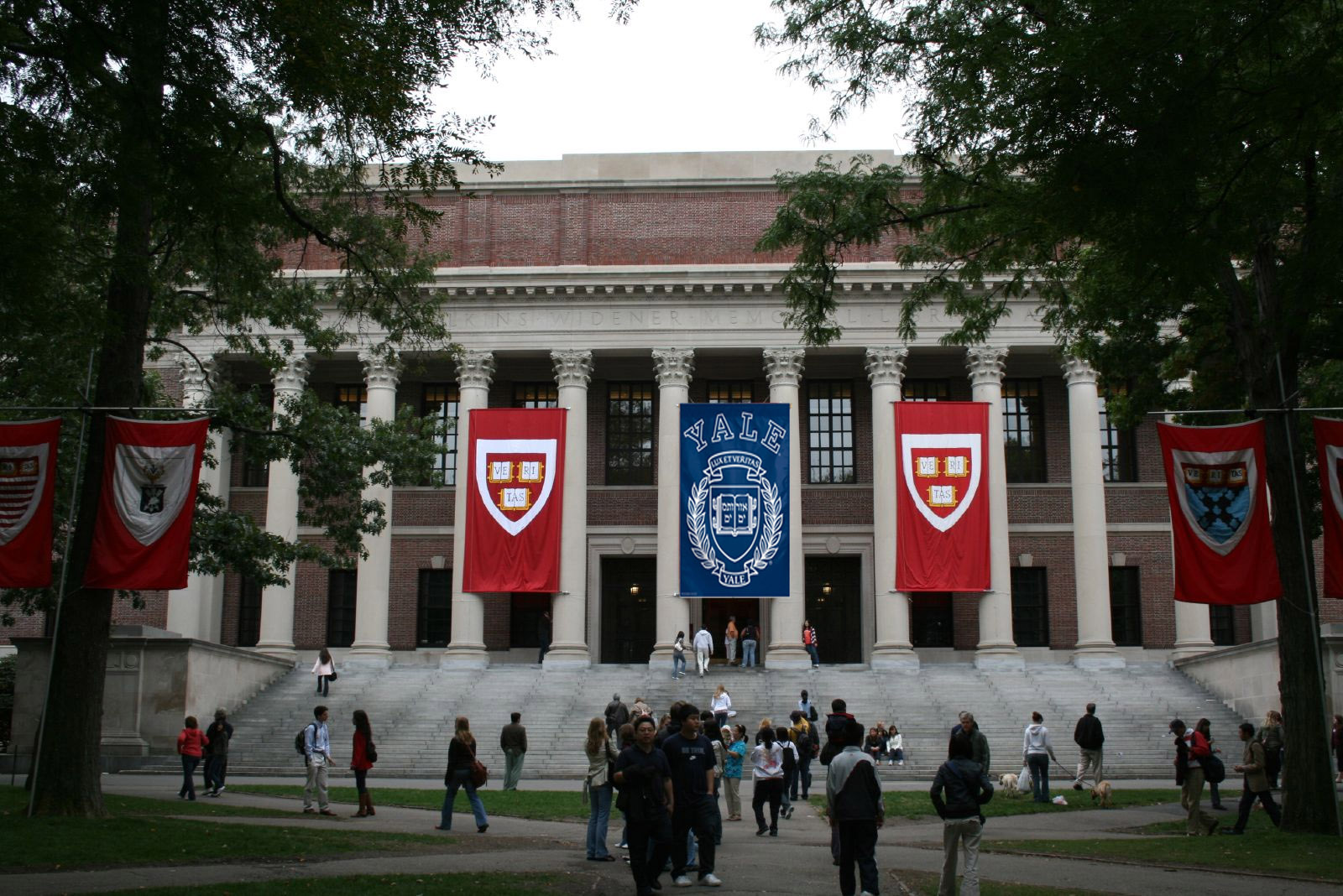
Why Harvard and Yale Had to Merge is Jane Shaw’s future history timeline of the events leading up to the May 2020 merger of Harvard and Yale:

That same day, faculty members at the University of Phoenix issued a report analyzing the cataclysmic changes that had occurred in higher education over the past ten years. They traced the history back to a New York Times columnist, Ron Lieber, and two articles he wrote in 2010 and 2011. They dubbed him the “short seller” of higher education.

Jane Shaw is president of the John W. Pope Center for Higher Education Policy.


Steven Bohm's Future Classroom

Courtesy Steven W Bohm (2009)

Welcome to Innovate.EDU, a site devoted to innovation in American Higher Education. Readers of my WWC  blog will recognize the style and substance of this site.  This is a site about innovation and change in colleges and universities. I have imported all of my education posts from WWC, which will continue as a site devoted to exploring the interesting things that happen when innovation and execution collide in large organizations.

Higher education is creeping up on 4% of US GDP. It’s the foundation of our economic future, but the discussions that take place in faculty lounges across the nation’s campuses are rarely shared outside the academy.  Innovation in education is happening at an accelerating pace, but it seems like it is happening in spite of the institutions that we regard as leaders.

Let’s change that.  Let’s have a discussion that everyone can join.  This is a place that should get you agitated.  I hope you will have an opinion and I really hope that it will be different from mine. We will not be academic although we hope to influence academic institutions.  Above all, let’s get lots of ideas on the table, because that’s the only way to innovate.