
They are consistent memes. We do not have to invest in American colleges and universities because (1) most jobs do not require a college degree, (2) there are too many college students already, or (3) long-term income is not related to level of education.
I hear their echos at neighborhood social gatherings. CCAPs Richard Vedder has been touting off-shoring and the shortage of tradesmen as a reason for not “mindlessly increasing college enrollments” for several years now. They are a consistent talking point in states that feel the need to reduce their expenditures and see the public university system as a fat, juicy target. If college graduates wind up driving cabs and flipping burgers — cartoonish versions of the truth — what is the real value of a college diploma?
Before anyone else buys into the idea that we need fewer — not more — college graduates, we should probably go to the videotape. A report entitled The Undereducated American casts grave doubt on some underlying assumptions that sound plausible on the surface but seem to crumble away when they are examined more closely.
Anthony Carnevale and Stephen Rose focused a lens on the production of college graduates compared to the market demand. They concluded that
- The United States has been under-producing college trained workers since at least 1980.
- Supply has failed to keep up with demand, resulting in a ten-year shortfall of up to 20 million graduates.
- The underproduction of college graduates is a significant cause of income inequality in America.
The most striking thing about their analysis is that it relies on traditional economic theory. Employers would have to be in a national conspiracy to behave irrationally to conclude otherwise.
According to Carnevale and Rose, the demand for college graduates has been growing at 2% annually since 1980 but the higher education system has been falling short of that demand by at least 0.5%. That’s a current deficit of 20 million college trained workers.
To put that in perspective: it would take an additional 200 universities the size of Georgia Tech just to fill that gap.
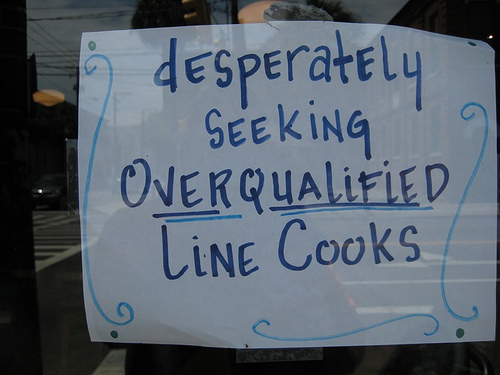
What about the idea that college graduates are being shunted into low-wage jobs that “don’t require a degree?” In truth college graduates hold only a tiny percentage of the jobs for which a college education is overkill. College-trained workers account for only 7% of the total number of cashiers and hairdressers for example. It is simply not true that the nation’s colleges and universities are producing overqualified line cooks.
Remarkably, even in those cases where a low skill job is held by a college graduate, a bachelor’s degree results in a “wage premium” for workers. On the average, college-educated hairdressers earn nearly 70% more than their high-school graduate workmates. Retail sales clerks fare even better: the 18% of the retail sales personnel who have college degrees earn 73.2% more than someone who has only a high school diploma. It is a wage premium that grows to 75% for some middle skill jobs.
Carnevale and Rose also analyze income discrepancies across the entire economy, concluding that the lack of college-trained personnel to fill available positions is a cause of income inequality. It is a problem that is compounded by the increasing selectivity of some colleges and universities. They with increasing frequency select their freshman candidates from a narrow socioeconomic pool. So, not only do they earn more, but they come from families with disproportionately large incomes and personal fortunes.
Arizona State president Michael Crow once laid a large chart in front of me and pointed out that “The United States has not increased capacity in higher education since 1960.” He was right. We need 200 more universities just to get back in the game.
 Innovate.EDU